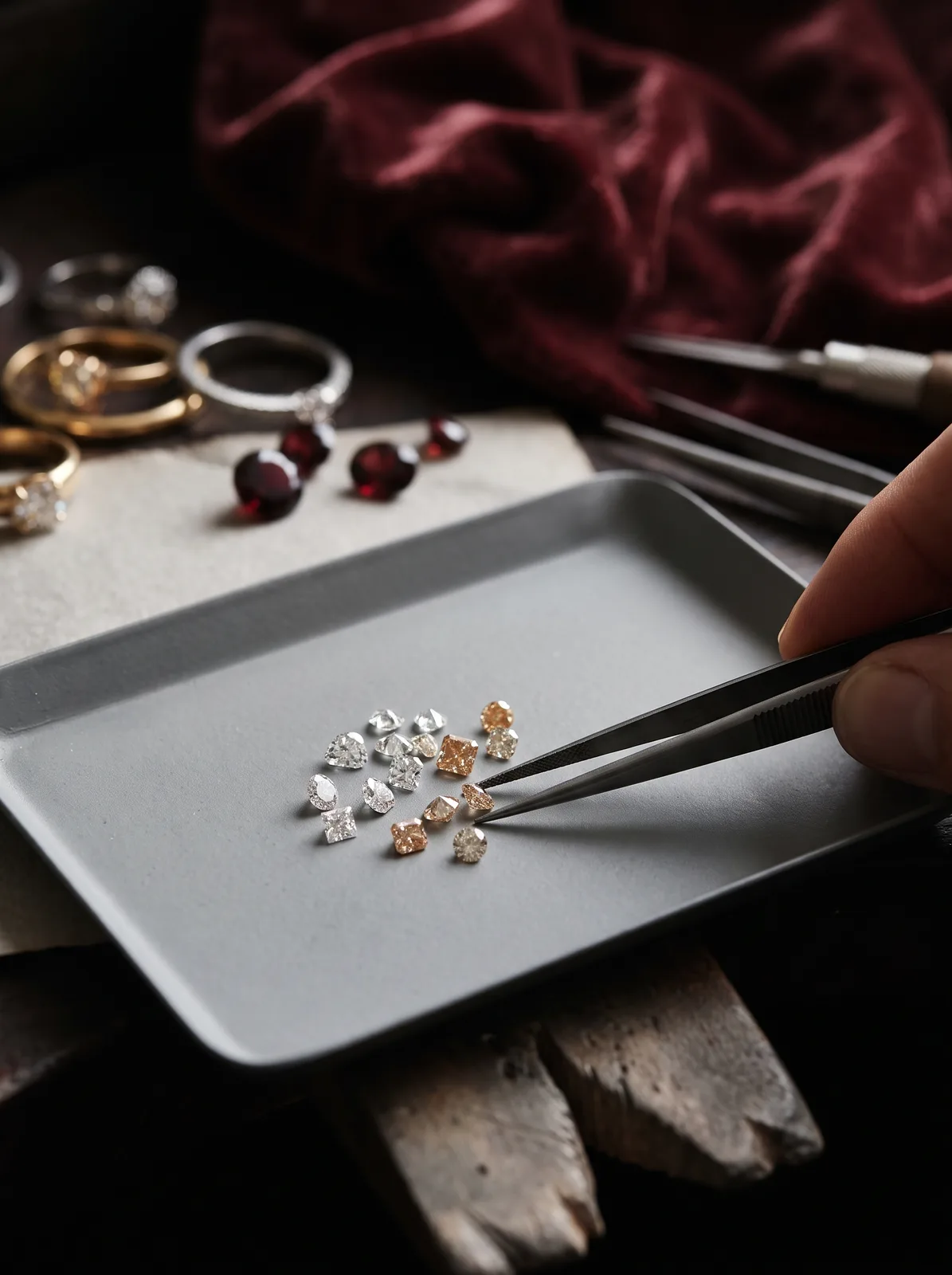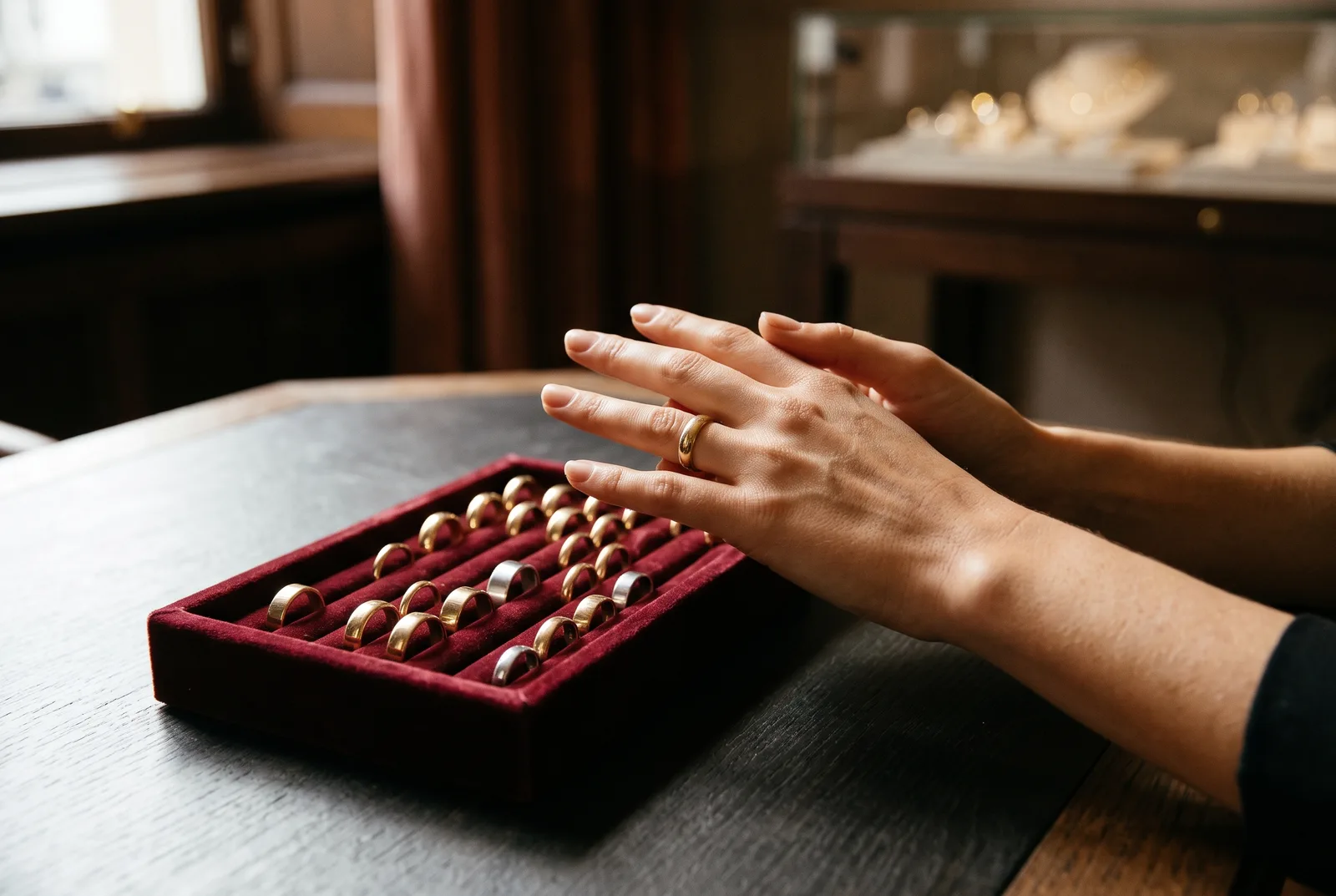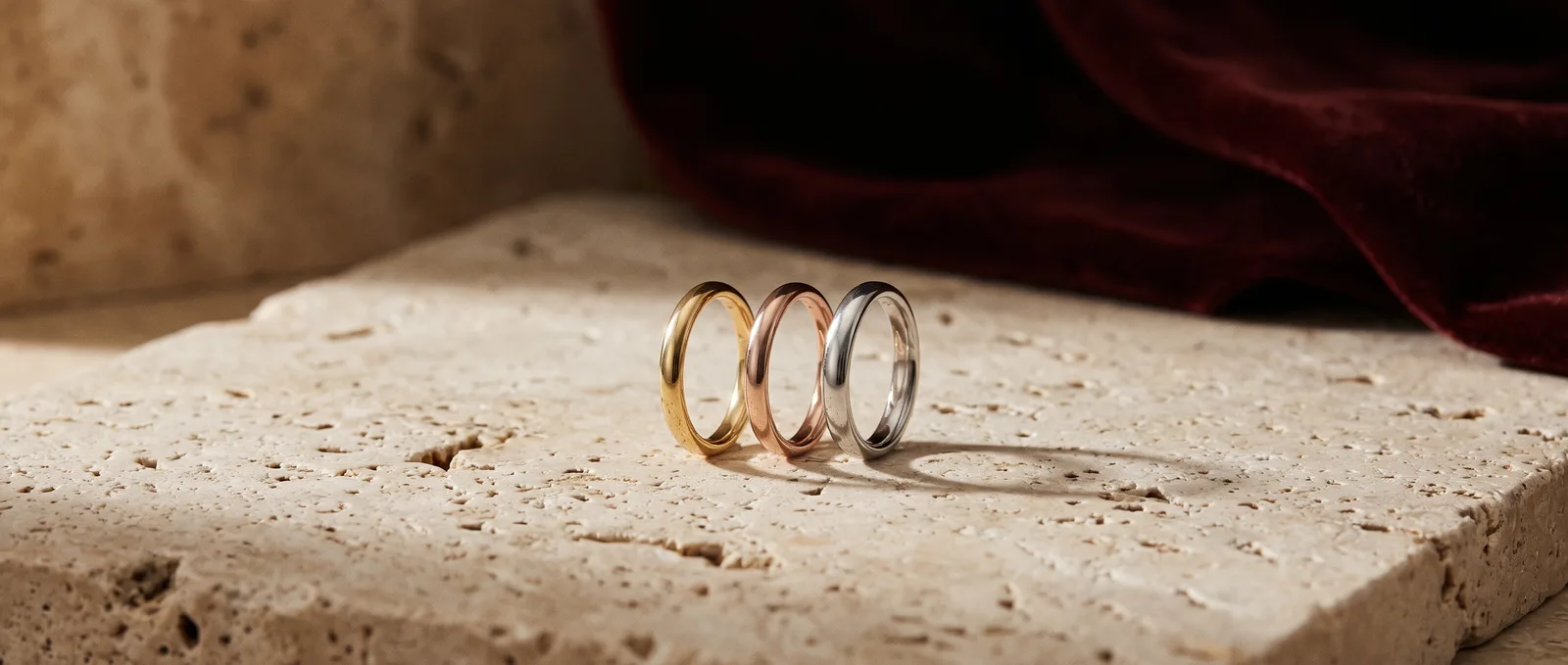
The metal is the part of the ring you see least and touch most. After thirty-odd years of setting stones in all four, here is what I tell people.
18ct yellow and rose gold
Our gold is 75 per cent pure and recycled. Yellow gold is warm and forgiving; small scratches soften into a gentle satin over time. Rose gold has a little more copper, which makes it slightly harder and gives it that blush. Both suit champagne diamonds and warm skin especially well.
18ct white gold
White gold is naturally a pale grey-yellow and is usually plated with rhodium to make it bright white. The plating wears through on the underside of a ring after a year or two. We replate for AED 350, or you can let it mellow; some clients prefer it.
Platinum
Platinum is denser and naturally white, so there is no plating to keep up. It doesn’t wear away when scratched; the metal moves rather than being lost, which is why it holds claws so securely. It costs more to begin with: our solitaires are AED 1,500 more in platinum.
- Most secure claws: platinum.
- Easiest to keep looking new: yellow or rose gold.
- Least upkeep for a white metal: platinum.
Wear a band in each metal for a minute in the salon. Most people know straight away.
Mixing metals
Your wedding band doesn’t have to match your engagement ring. Gold and platinum can sit side by side, though the harder platinum will slowly mark the softer gold. A shaped band, made to meet the engagement ring, helps the two wear together.