If the ring is a surprise, the size is often the hardest part. Here are the ways that work, from most to least reliable.
Borrow a ring they already wear
A ring from the same finger on the same hand is best. Bring it in, or draw around the inside on paper and measure the inside diameter in millimetres. A ring from the right hand is usually half a size larger than the left.
Ask someone who knows
A close friend or sibling may know, or may be able to find out without suspicion. Jewellery shopping trips have revealed a great many ring sizes.
Sizes, briefly
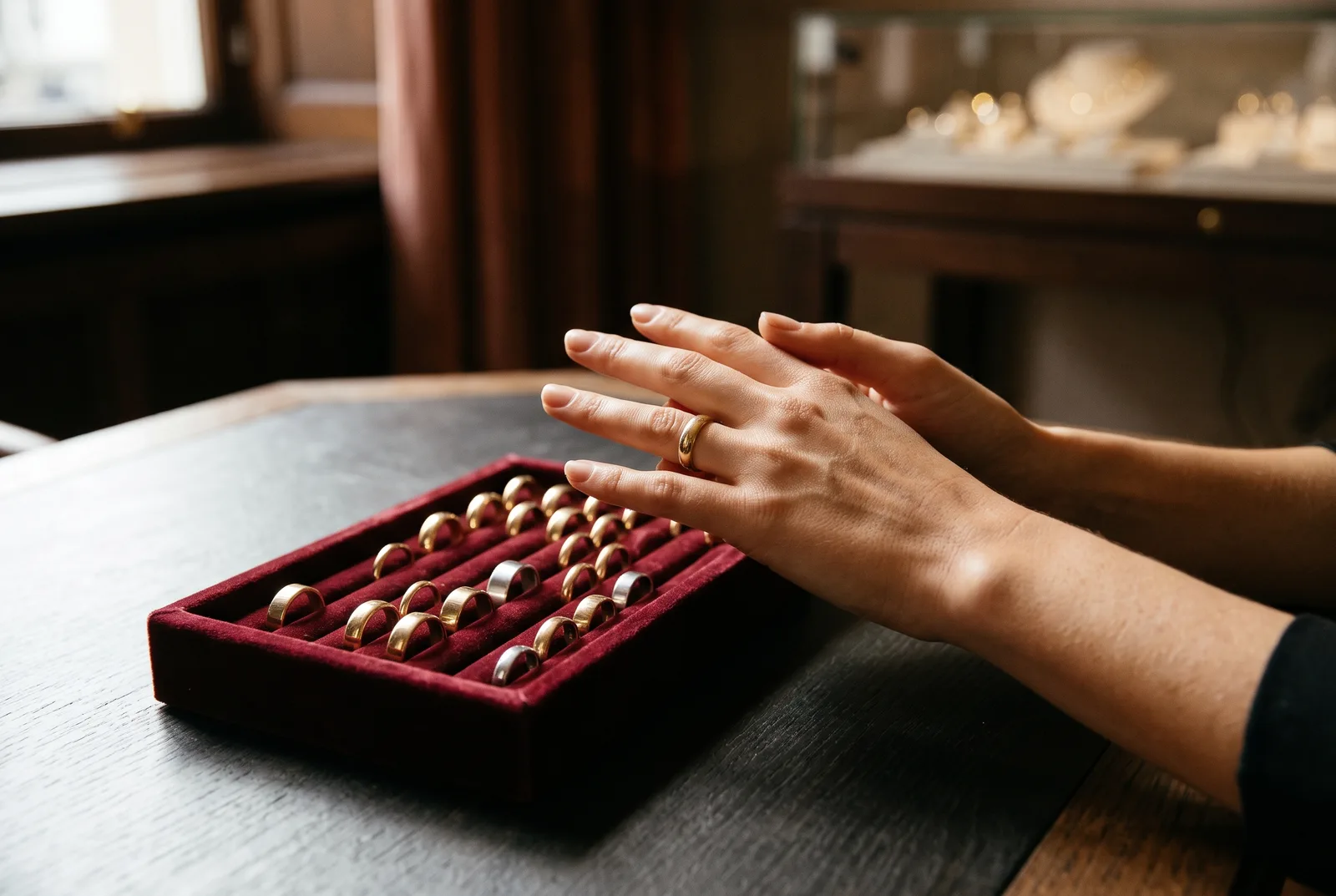
We use European ring sizes, which are simply the inside circumference in millimetres, from about 44 to 70. The most common sizes we make are 50 to 54 for engagement rings and 60 to 66 for men’s wedding bands, and we convert US and other sizes for you. Fingers swell in the summer heat and in the evening, and shrink in a cold, air-conditioned room, so we measure in the afternoon if we can.
- Wide bands fit tighter: size up by half for anything over 5 mm.
- Knuckles matter: the ring must pass over the knuckle and not spin on the finger.
- Pregnancy and the seasons change sizes; we’ll take that into account.
If in doubt, we make it a little larger. Going down is easier than going up.
If it doesn’t fit
Every engagement ring we make can be resized free within the first year, up to two sizes either way, usually within a week. Full-eternity rings are the exception, so for those we’ll want a measured size before we start.