“Why can’t I take it home today?” is the question I’m asked most at the end of a taster. The answer is that a freshly thrown pot is still mostly mud. Here’s what happens to it in the three weeks before you see it again.
Days 1 to 3: leather-hard and trimming
Your pot dries slowly on a shelf under plastic until it’s leather-hard, firm enough to hold its shape but soft enough to carve. We turn it upside down on the wheel and trim a neat foot ring, then sign the base with your initials.
Days 4 to 10: bone dry and the first firing
The pot dries completely, losing about a tenth of its size. Then it goes into the kiln for a bisque firing to 1,000°C, which takes about eight hours to heat and a day to cool. It comes out hard, pale pink and slightly porous.
Days 11 to 14: glazing
We dip each pot in the glaze you chose and wipe the foot clean so it doesn’t stick to the kiln shelf. Glaze looks nothing like its fired colour: our cobalt goes on a dull pink.
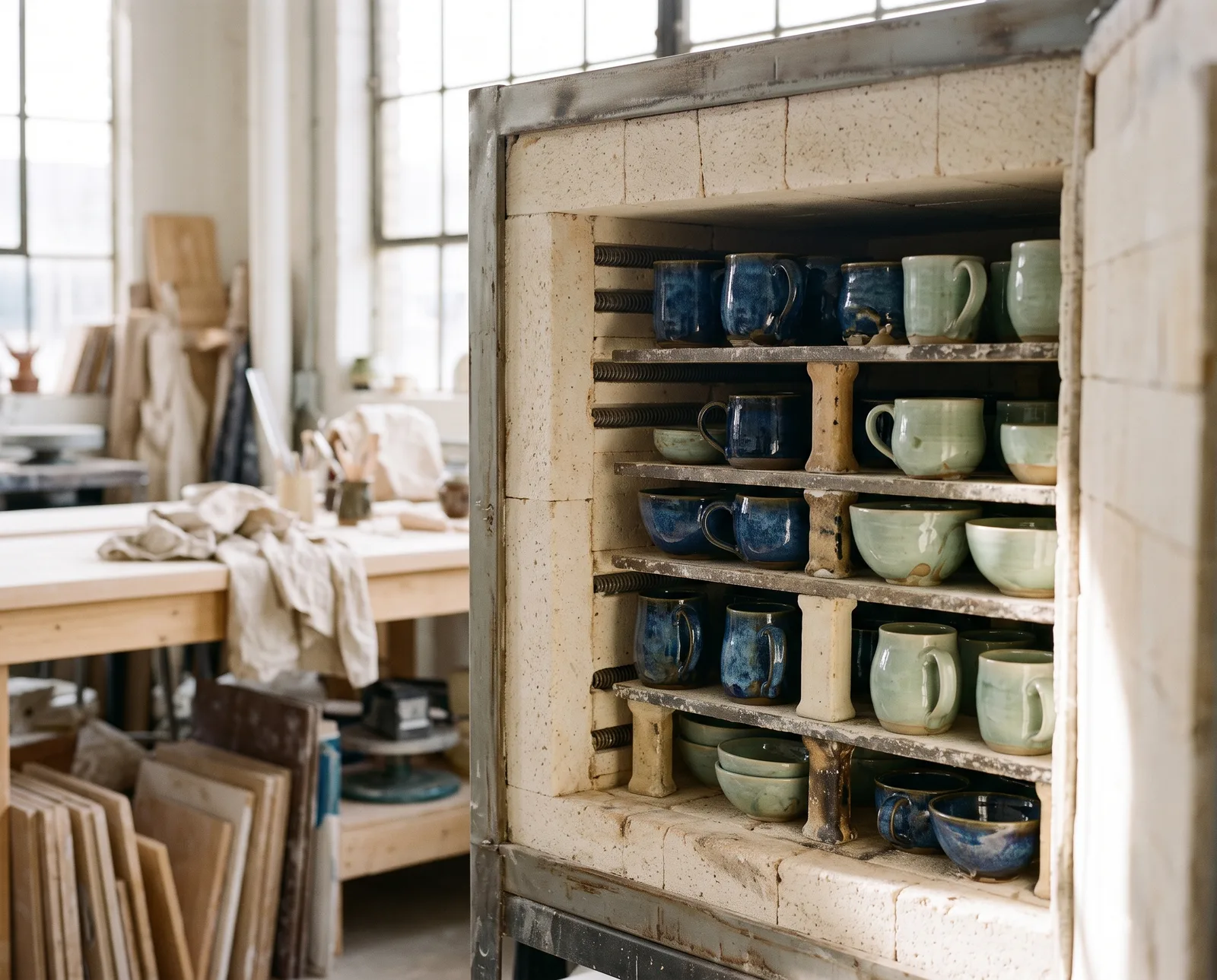
Opening the kiln after a glaze firing is still the best part of my week, seven years in.
Days 15 to 21: the glaze firing
The second firing goes to 1,260°C, where the clay turns to stoneware and the glaze melts to glass. We cool it slowly, check every piece and text you when yours is ready.
Occasionally a piece cracks or a glaze runs. If that happens to yours, we’ll tell you, and you can come back to make another one free of charge.