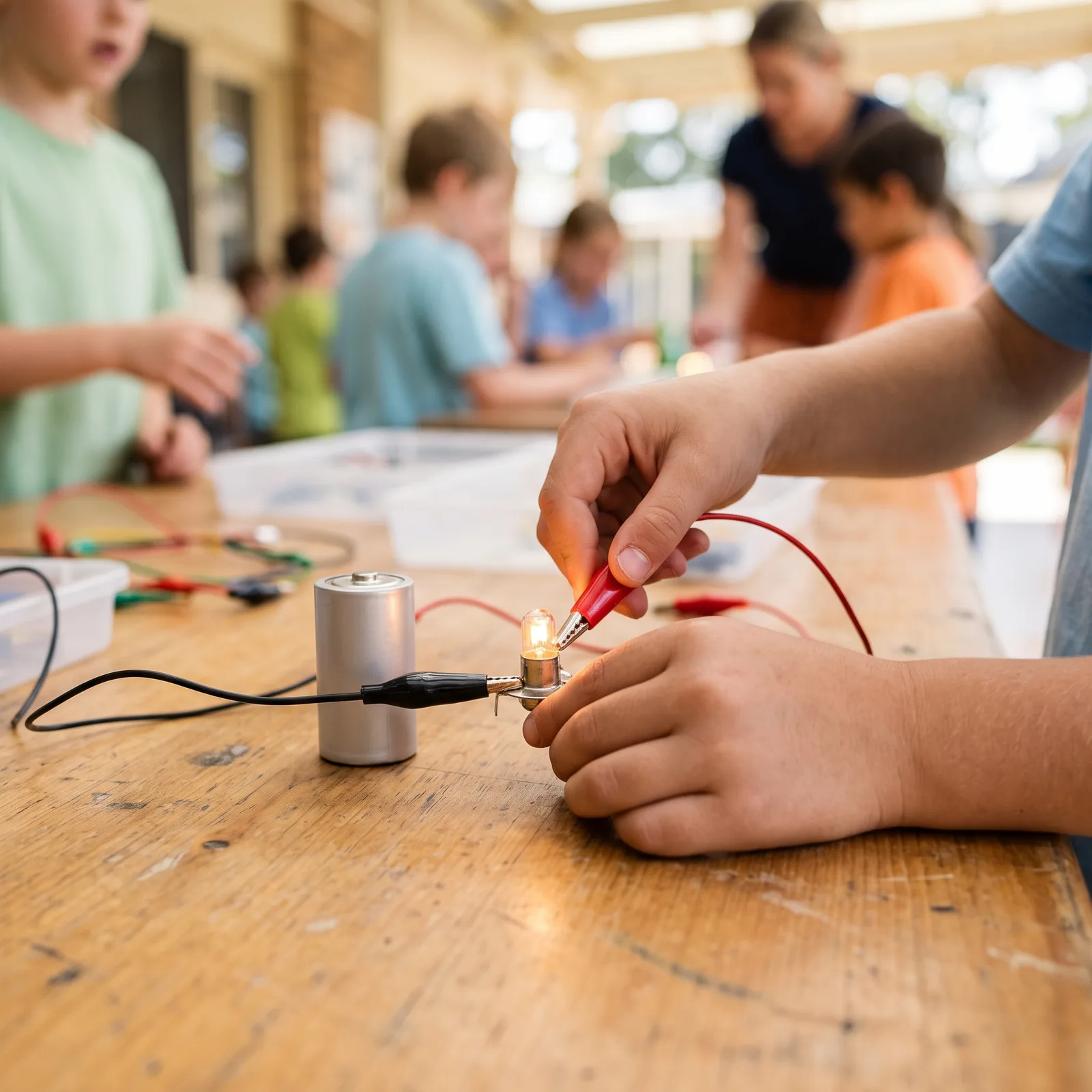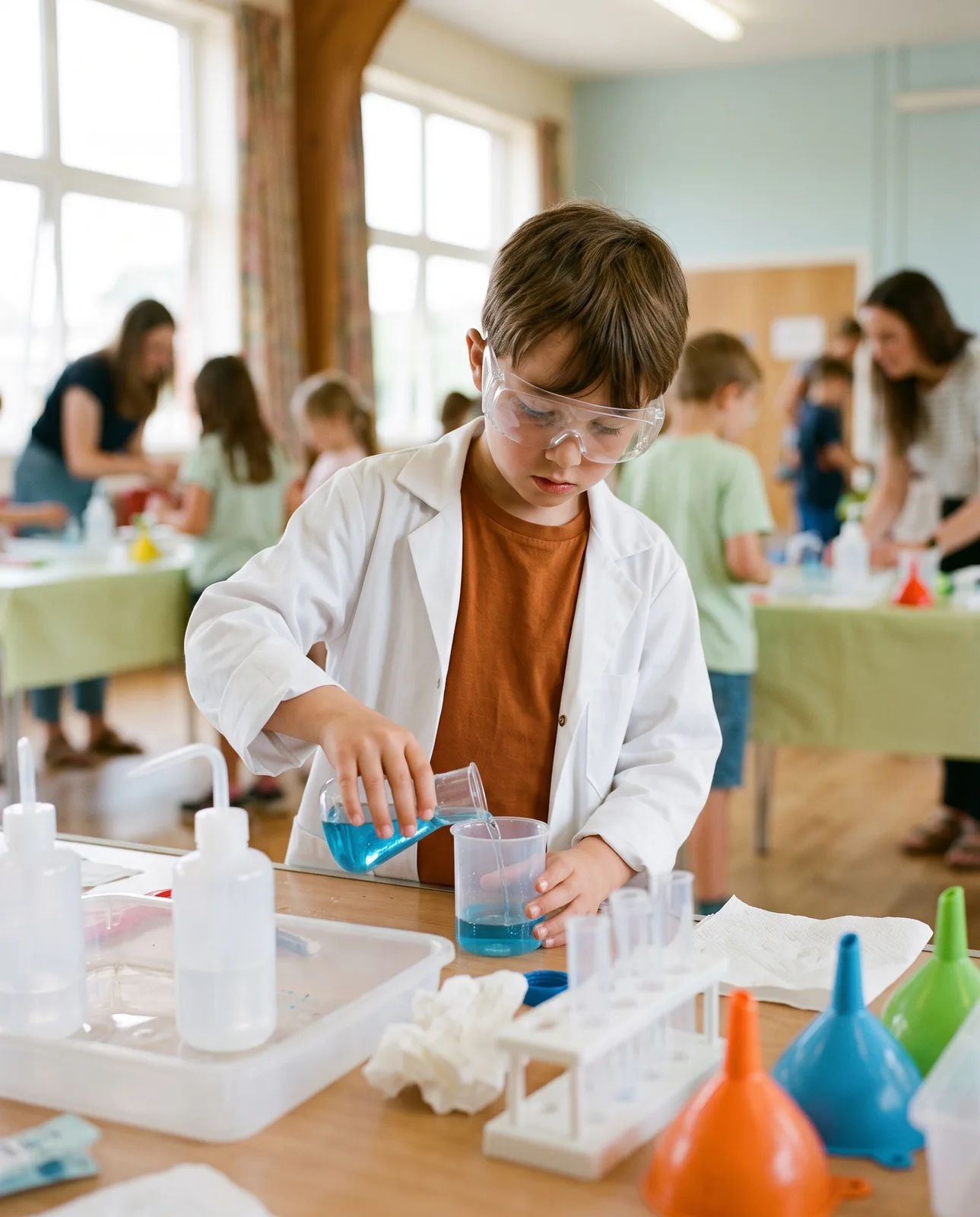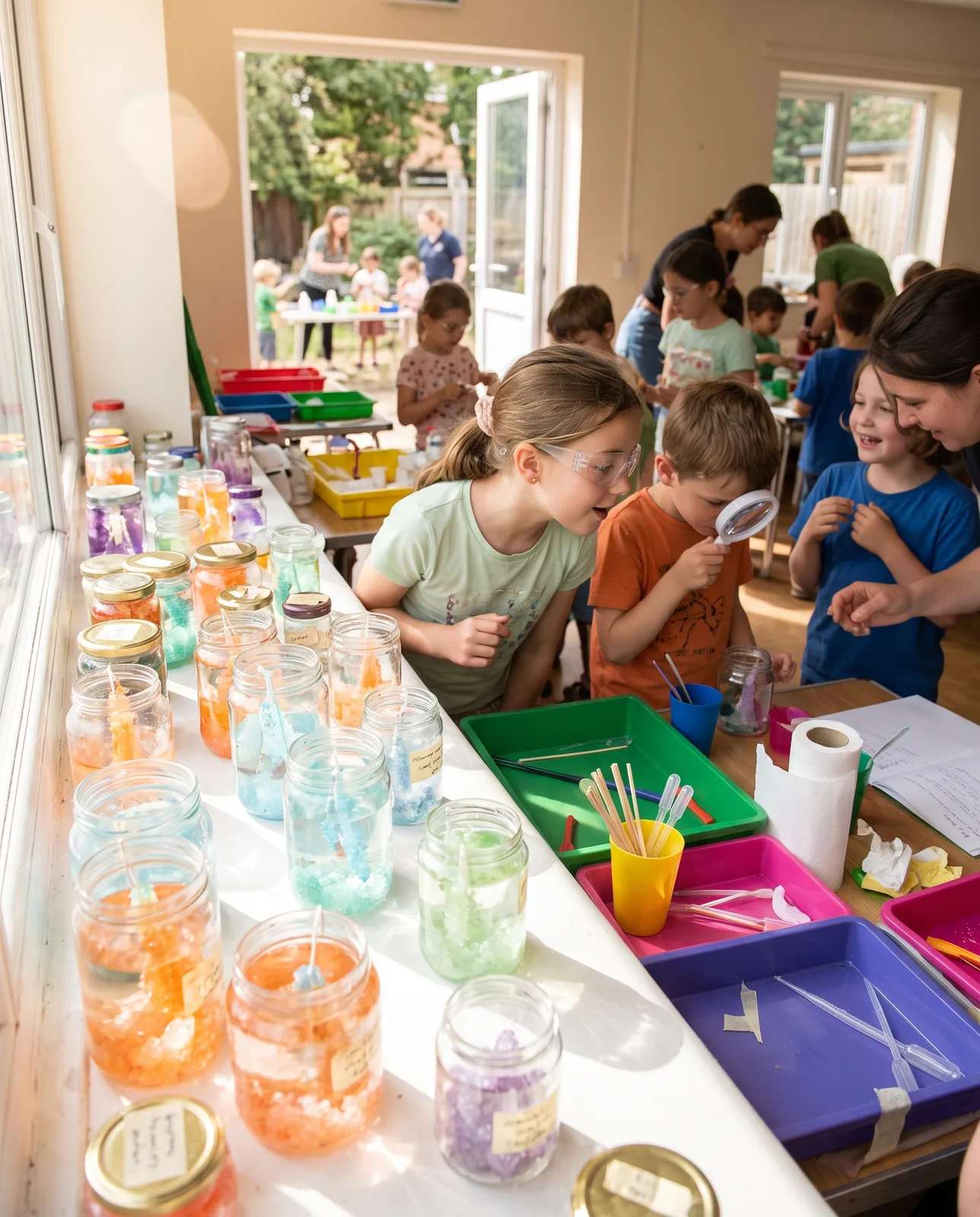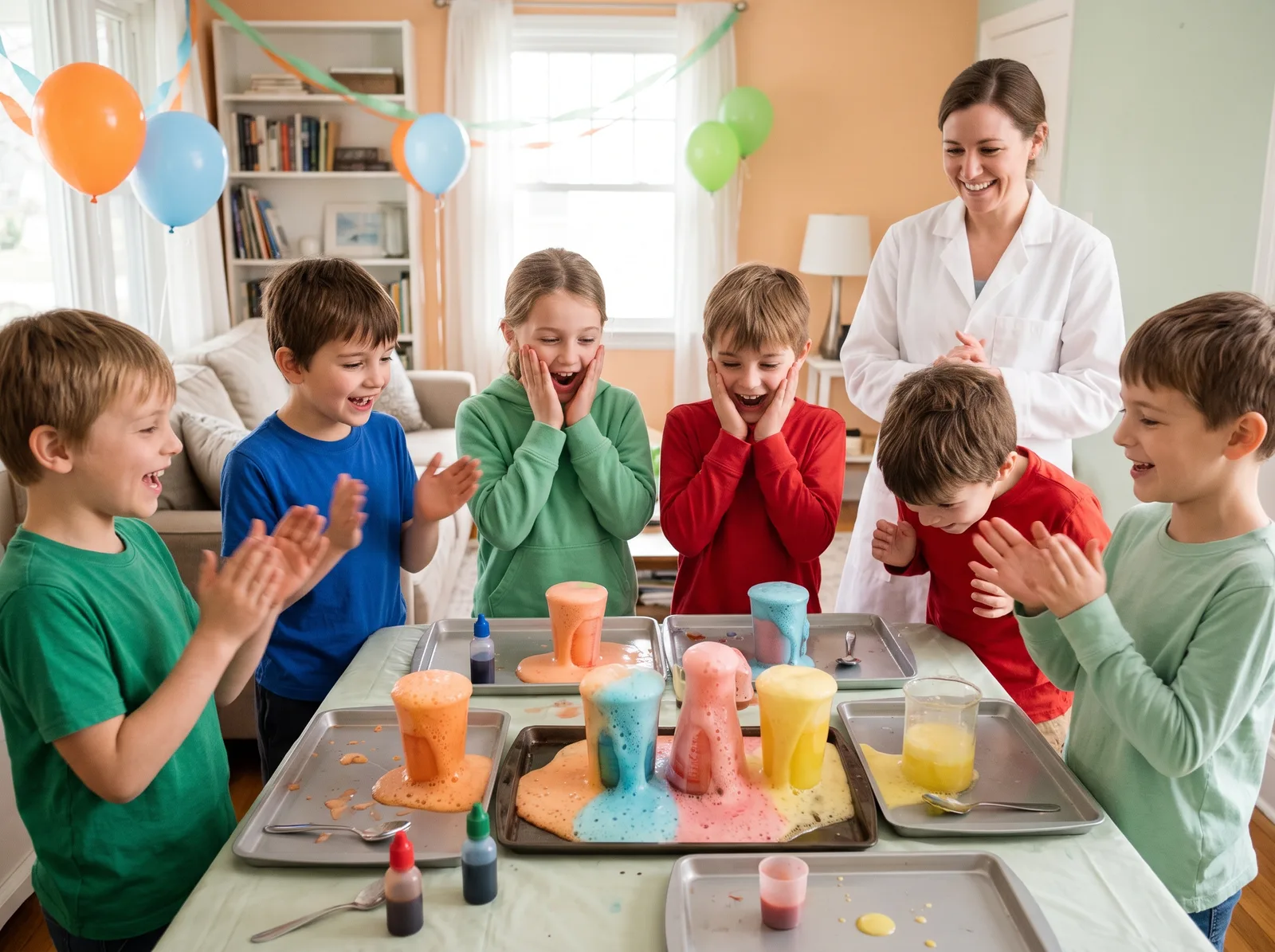
Dubai afternoons stay too hot for the park well into October, but that doesn’t have to mean screens. These five experiments use things most kitchens already have, take ten minutes to set up, and work for children from about five upwards with a grown-up nearby.
1. Red cabbage rainbow
Chop a quarter of a red cabbage, cover it with hot water and leave it for 15 minutes. Strain the purple water into five glasses. Add a spoon of lemon juice to one, vinegar to another, baking soda to a third, and watch the colours change. The cabbage is an indicator: it turns pink in acids and green or blue in alkalis.
2. Dancing raisins
Drop six raisins into a glass of fizzy water. Bubbles cling to their wrinkly skins, lift them to the top, pop, and let them sink again. Ask your child to guess how many trips one raisin makes before the fizz runs out.
3. Lava lamp in a jar
Fill a jar two-thirds with sunflower oil and top it up with water and a few drops of food colouring. Drop in a piece of a fizzing vitamin tablet. Coloured blobs rise and fall because water and oil don’t mix and the gas carries the water up.
4. Walking water
Line up three glasses: coloured water, empty, coloured water. Bridge them with strips of paper towel. Over an hour the water climbs the paper and mixes in the middle glass.
5. Ice fishing
Lay a piece of string across an ice cube, sprinkle a pinch of salt on top and count to 30. Lift the string and the cube comes with it.
Ask “what do you think will happen?” before every experiment. The guess is where the science starts.
If you try any of these, send us a photo by email or WhatsApp and we’ll share our favourites, without names, at the next club.